When Must a Salaried Landlord File a Tax Return? The ¥200,000 Rule and Added Income Tax Plus Resident Tax by Taxable-Income Bracket
A salaried worker paid by one employer with year-end adjustment must file a return if income other than salary exceeds ¥200,000 a year. We estimate the added income tax (with surtax) and resident tax when rental income rises by ¥1 million or ¥2 million, by bracket.
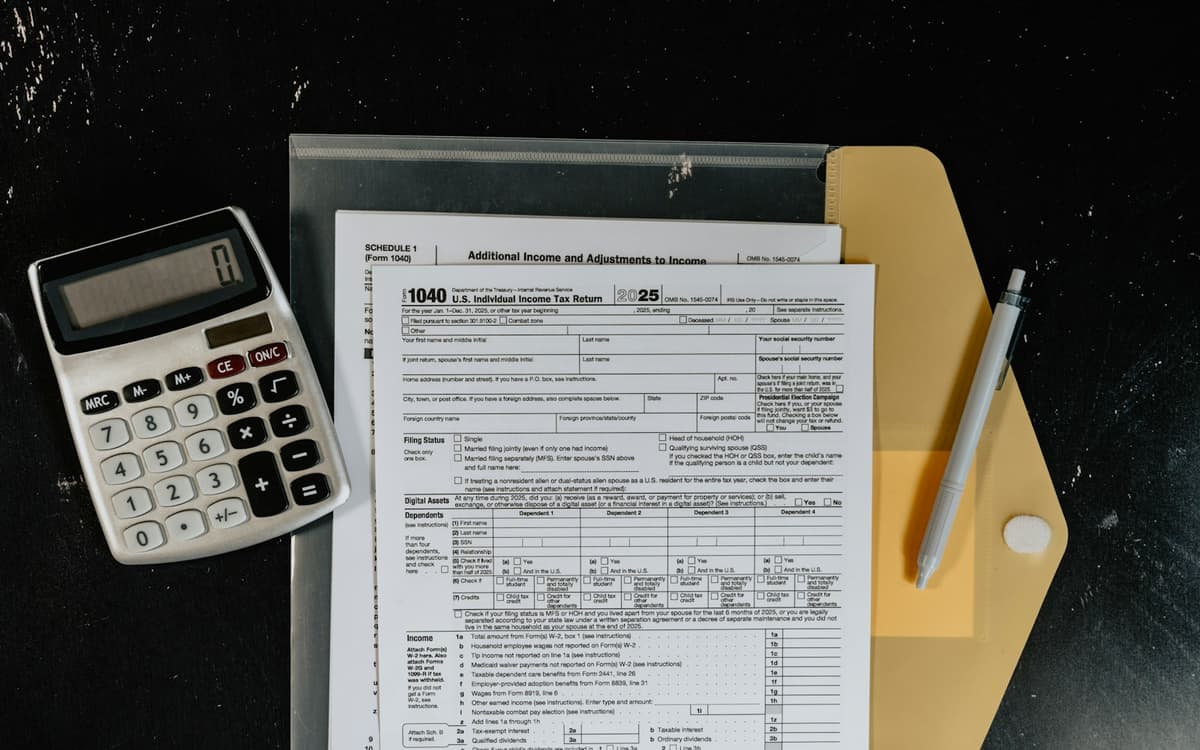
When a salaried employee starts renting out property, rental income is added on top of salary. Employees paid by one employer whose tax is settled through year-end adjustment have mostly never filed a return. The first things to check are the rental income level at which a return becomes mandatory and how much tax rises as income grows.
Based on National Tax Agency (NTA) materials (laws as of April 1, 2026), this article estimates the filing conditions and the added tax by taxable-income bracket. Employees enrolled in an employer's health insurance and employees' pension usually see no change in premiums when rental income rises, so only income tax and resident tax are covered here. For those on National Health Insurance, see rental income and National Health Insurance premiums.
When a return is required: the ¥200,000 rule
According to NTA No. 1900, the main cases in which a salaried worker must file are as follows.
| Case | Condition for filing |
|---|---|
| One payer of salary, all subject to withholding | Income other than salary and retirement income totals more than ¥200,000 a year |
| Two or more payers, all subject to withholding | Salary not covered by year-end adjustment plus other income exceeds ¥200,000 |
| Annual salary above ¥20 million | Required regardless of other amounts |
With two or more employers there is an exception: no filing is needed if salary after certain deductions is ¥1.5 million or less and other income is ¥200,000 or less.
The key point is that the ¥200,000 is tested on income, not revenue: rent minus necessary expenses such as management fees, fixed asset tax, loan interest and depreciation. For example, if rent is ¥3 million a year but expenses and depreciation total ¥2.9 million, rental income is ¥100,000 and no filing obligation arises under the ¥200,000 rule.
Three further points must be considered separately.
- To offset a loss against salary income and receive a refund, you must file
- The blue-return special deduction (up to ¥650,000) requires blue-return approval and an actual filing
- Even if no income tax return is needed, resident tax filing is a separate system; confirm with your municipality
How added tax works by taxable-income bracket
Once you file, rental income is combined with salary and other income, and progressive rates apply to total taxable income. NTA No. 2260 gives the income tax rates below. We add the 2.1% reconstruction special income tax (on the tax amount) and the 10% standard resident tax rate.
| Taxable income | Income tax rate | With surtax | Resident tax | Burden per added yen of income |
|---|---|---|---|---|
| Up to ¥1.95 million | 5% | 5.105% | 10% | about 15.1% |
| Over ¥1.95M to ¥3.3M | 10% | 10.21% | 10% | about 20.2% |
| Over ¥3.3M to ¥6.95M | 20% | 20.42% | 10% | about 30.4% |
| Over ¥6.95M to ¥9M | 23% | 23.483% | 10% | about 33.5% |
| Over ¥9M to ¥18M | 33% | 33.693% | 10% | about 43.7% |
Added burden when rental income rises (estimate)
Using these marginal rates, we calculate the added burden assuming the additional income stays entirely within the bracket. This is a rough estimate that ignores the resident tax per-capita levy and bracket crossings.
| Added rental income | Up to ¥1.95M | Up to ¥3.3M | Up to ¥6.95M | Up to ¥9M | Up to ¥18M |
|---|---|---|---|---|---|
| ¥200,000 | about ¥30,000 | about ¥40,000 | about ¥61,000 | about ¥67,000 | about ¥87,000 |
| ¥500,000 | about ¥76,000 | about ¥101,000 | about ¥152,000 | about ¥167,000 | about ¥218,000 |
| ¥1 million | about ¥151,000 | about ¥202,000 | about ¥304,000 | about ¥335,000 | about ¥437,000 |
| ¥2 million | about ¥302,000 | about ¥404,000 | about ¥608,000 | about ¥670,000 | about ¥874,000 |
An employee with ¥6 million of taxable income (the 20% bracket) who adds ¥1 million of rental income a year pays about ¥300,000 more tax. After tax, that income is roughly ¥700,000.
Using this in property selection and investment decisions
Three points help a salaried landlord decide.
- Compare yields after tax: in the 20% bracket and above, about 30% of rental income leaves as tax. Look at after-tax cash flow, not gross yield alone
- Depreciation can adjust income: older wooden properties depreciate quickly and compress income, but affect the capital gain at sale. See depreciation of used buildings
- Watch bracket crossings: when added income pushes taxable income above ¥6.95 million, the higher rate applies to the excess. This can inform the timing and size of additional purchases
Even at ¥200,000 or less, you must file to use a loss refund or the blue-return special deduction. "Not required" and "better to file" are different matters, so review last year's results at the start of the year.
Frequently Asked Questions
QAt what rental income must a salaried landlord in Japan file a tax return?
A salaried worker paid by one employer, with all salary subject to withholding, must file if income other than salary totals more than ¥200,000 a year (National Tax Agency No. 1900, as of April 1, 2026). The ¥200,000 is measured as income after necessary expenses, not as revenue.
QDoes a salaried landlord in Japan have to file if rental income is a loss?
Under the ¥200,000 rule there is no filing obligation, because income is at or below ¥200,000. However, to offset the loss against salary income and obtain a refund of withheld income tax, the landlord must file a return voluntarily.
QHow much extra tax does additional rental income cost a salaried worker in Japan?
In the bracket of taxable income above ¥3.3 million up to ¥6.95 million, income tax of 20% (20.42% with the reconstruction surtax) plus 10% resident tax adds about 30.4% per additional yen of rental income. It is about 15.1% at ¥1.95 million or less and about 33.5% for ¥6.95–9 million.
QIs a resident tax return unnecessary if rental income is ¥200,000 or less in Japan?
Even when no income tax return is required, a resident tax filing may still be needed. Income tax and resident tax are separate systems, so check with your municipality even if rental income is small.
Sources
Talk to us even if you don't know where to start
Buying, selling, financing, property management and inheritance planning. Practitioners will propose an approach tailored to your situation.
Related Articles

Depreciable Asset Tax for Rental Owners: Air Conditioners, Exterior Works and Signs Against the ¥1.5 Million Threshold, and a ¥70,000 Annual Cost That Moves Yield 0.09 Points
Air conditioners, parking lot paving and similar items in rental operations can be subject to fixed asset tax on depreciable assets. The exemption threshold is a ¥1.5 million taxable base and the standard rate is 1.4%. A ¥5 million base means ¥70,000 a year, trimming the yield on ¥5.6 million NOI by about 0.09 points. This article covers how to identify covered assets and filing pitfalls.
Consumption Tax in Rental Operations: Residential Rent Is Exempt, Offices and Shops Are Taxable. On a ¥100 Million Building, the ¥10 Million Tax Can Be Recovered Only for Commercial Use, Not Housing
Residential rent is exempt from consumption tax, while income from offices, shops and minpaku is taxable. On a ¥100 million (ex-tax) building the tax is ¥10 million, which cannot be credited for residential rental buildings but may be refunded for commercial ones. We run the numbers on the simplified tax system (40% for real estate) and the three-year restrictions.
Blue-Return Deduction for Rental Income: ¥100,000 or ¥650,000? How Business Scale (10 Rooms, 5 Houses) and e-Filing Shift Tax by About ¥167,000 a Year at ¥6.4M Taxable Income
The blue-return special deduction on real estate income comes in three tiers: up to ¥650,000, ¥550,000 or ¥100,000. We explain the NTA's business-scale rule (roughly 10 rooms or 5 houses) and the e-filing requirements, and estimate a gap of about ¥167,000 a year at ¥6.4 million taxable income.

Repairs vs. Capital Expenditure on Rental Property: The ¥200,000, ¥600,000 and 10% Tests, and a ¥1.8 Million Exterior Repaint That Shifts First-Year Tax by About ¥570,000
Work on a rental property is deductible in full in the year paid if it counts as a repair, but must be depreciated over its useful life if it counts as capital expenditure. This article sets out the National Tax Agency tests (under ¥200,000, a roughly three-year cycle, under ¥600,000, 10% of acquisition cost) and models the first-year tax gap on a ¥1.8 million exterior repaint.

How Much Do National Health Insurance Premiums Rise With Real Estate Income? Yokohama's 2026 Rates, the ¥1.13 Million Cap and the Combined Burden With Income and Resident Tax
National health insurance enrollees pay more as real estate income grows. Under Yokohama's fiscal 2026 rates (ages 40-64), the income-based charge totals 14.13% and the annual cap is ¥1.13 million, reached at about ¥7.9 million of income. We estimate the burden combined with income and resident tax.

Should Landlords Buy Earthquake Insurance? For a Tokyo Wooden Apartment Building, Coverage at 30% or 50% of the Fire Policy Costs ¥74,000 or ¥123,000 a Year, and Even a Total Loss Falls Short of a ¥72 Million Loan Balance
Earthquake insurance can cover only 30–50% of the fire insurance amount, and only the building owner can buy it for a rental property. A Tokyo wooden-apartment model shows premiums of ¥74,000–¥123,000 a year and total-loss payouts of ¥18–30 million, then sets out how to decide given the loan balance and the lack of rent-loss cover.
Comments
Comment guidelinesMembers can comment on this article. Every comment is checked by AI before it is published.
Sign in to comment