Japan Investor Survey: Nagoya Office Cap Rate Edges Up (Nov 2026)
In the 55th Japanese Real Estate Investor Survey (October 2026), published Nov 25, the expected yield for Marunouchi/Otemachi offices held at 3.2% for an eighth straight round. Nagoya rose 0.1 point to 4.4%, the first office increase since April 2011. Intent to sell rose 7 points to 35%.
Key takeaways
- The expected yield for Class A offices in Marunouchi/Otemachi was 3.2% in the October 2026 survey, flat for an eighth straight round.
- Nagoya offices rose from 4.3% to 4.4%, the first office increase since the April 2011 survey.
- 35% of respondents plan to sell existing holdings (+7 points); rising interest rates were the top risk, cited by 131 firms.
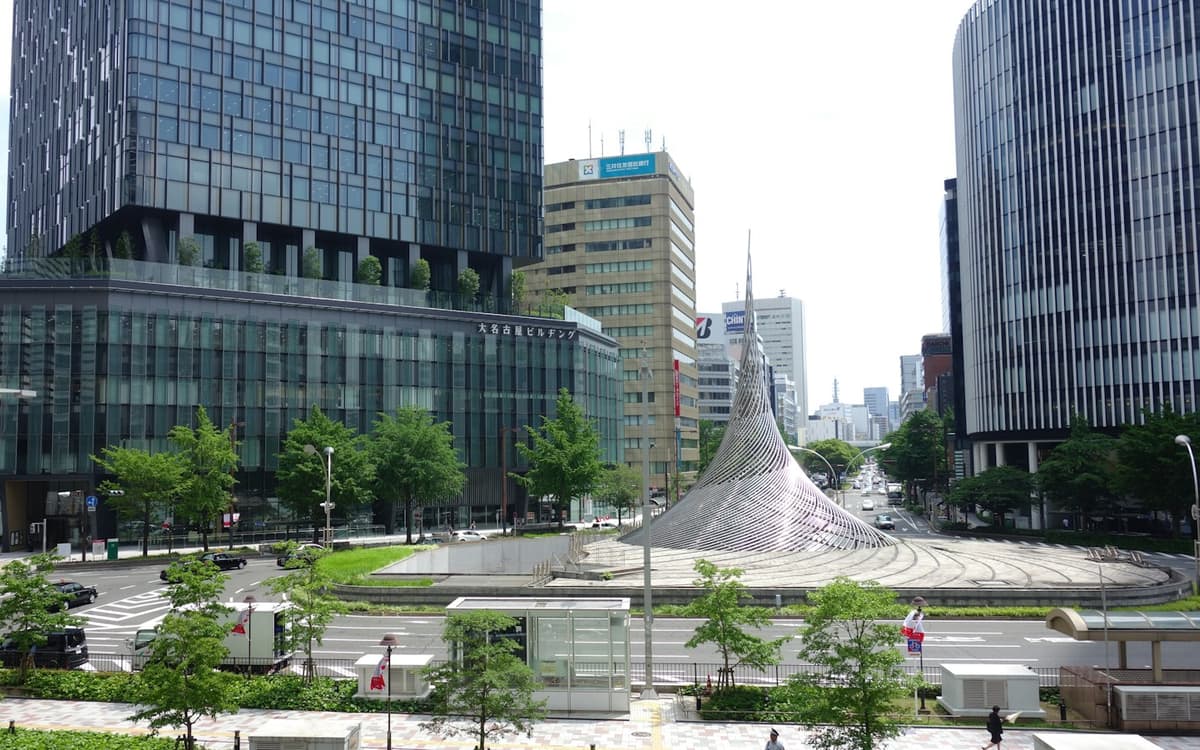
The Japan Real Estate Institute (JREI) published its 55th Japanese Real Estate Investor Survey (as of October 2026) on November 25, 2026. Expected yields on investment property were flat overall, and Class A offices in Tokyo's Marunouchi and Otemachi stayed at 3.2% for an eighth consecutive round.
Nagoya offices, however, rose 0.1 point from 4.3% to 4.4%, the first increase in expected office yields since the 24th survey (April 2011). The share of investors planning to sell also rose by 7 points, so there are signs of change beneath the flat headline numbers.
Most expected yields were flat; Nagoya offices were the main mover
Apart from the Nagoya office increase and a few declines for suburban shopping centers, expected yields for the main asset types were unchanged from the previous survey (April 2026). JREI aggregates yields from investor responses and uses the median as the representative value.
| Asset / area | Apr 2026 | Oct 2026 | Change |
|---|---|---|---|
| Office, Tokyo (Marunouchi/Otemachi) | 3.2% | 3.2% | 0.0pt |
| Office, Osaka (Midosuji) | 4.1% | 4.1% | 0.0pt |
| Office, Nagoya | 4.3% | 4.4% | +0.1pt |
| Office, Fukuoka | 4.5% | 4.5% | 0.0pt |
| Rental housing, Tokyo Johoku (studio) | 3.6% | 3.6% | 0.0pt |
| Rental housing, Tokyo Johoku (family) | 3.7% | 3.7% | 0.0pt |
| Logistics (multi-tenant), Tokyo Koto | 3.8% | 3.8% | 0.0pt |
| Limited-service hotel, Tokyo | 4.1% | 4.1% | 0.0pt |
Source: JREI, 55th Japanese Real Estate Investor Survey (as of October 2026).
The office increase is limited to one area, but it is the first in 14 years
Only Nagoya saw an office yield increase, but because it is the first since the April 2011 survey, it is being watched as a change of direction. In Tokyo, Nihonbashi (3.4%), Toranomon, Akasaka, Roppongi and Shibuya (3.5%), Konan and Nishi-Shinjuku (3.7%) and Ikebukuro (3.8%) were all unchanged.
Sapporo (4.8%), Sendai (5.0%), Yokohama (4.3%), Kyoto (4.7%) and Hiroshima (5.2%) were also flat. Marunouchi/Otemachi's 3.2% has now held for eight rounds, counting the seven through April 2026.
Housing, logistics, retail and hotels were mostly flat
For whole-building rental housing, Tokyo Johoku was 3.6% for studios and 3.7% for family units, and every regional city surveyed was flat. Sapporo, for example, was 4.9% and 5.0%, Osaka 4.2% and 4.3%, and Fukuoka 4.5% and 4.5%.
In retail, prime urban shops were flat in all areas, with Ginza at 3.3% (flat for four rounds). Suburban shopping centers were a mix of flat and lower: Sendai and Kyoto each fell 0.1 point (Sendai 6.0%, Kyoto 5.7%), while Tokyo was flat at 5.0%.
Logistics in Tokyo's Koto area was 3.8% (flat for six rounds) and Tama 4.0% (four rounds), with other areas unchanged. Limited-service hotels were all flat: Tokyo 4.1%, Osaka and Kyoto 4.5%, Fukuoka 4.7%.
Investors stay positive, but intent to sell rose to 35%
On their stance for the coming year, 91% said they will actively make new investments, down 2 points but still above 90%. Those planning to hold off on new investment rose 1 point to just 6%.
The notable shift is that "sell existing holdings" rose 7 points to 35% (multiple answers allowed). JREI summarizes that investors' active stance has been maintained but the share intending to sell rose sharply. The reasons for selling are not given in the excerpt of the published materials.
The survey date was October 1, 2026. Questionnaires went to 174 firms, including asset managers, insurers, banks and pension funds, and 144 responded (response rate 82.8%; 142 in the previous round).
Top risk is rising interest rates; inflation is starting to feed into cap rates
Asked to pick two risks for the real estate investment market, 131 firms chose "rising interest rates," followed by 69 for "higher construction costs and running costs such as management fees." As growth factors, 101 firms chose "more diverse market participants (more overseas players, public pension funds, sovereign wealth funds)" and 93 chose "more diverse investment assets."
In the special survey on inflation, 57.4% said rising borrowing rates and expected inflation currently affect cap rates "somewhat" (up 19.8 points from a year earlier), while 31.8% said "not at all" (down 22.8 points). Looking two to three years ahead, those saying inflation will affect cap rates rose from 9.3% to 39.5%, and those saying it will affect rents rose from 34.8% to 60.0%.
| Inflation impact (next 2–3 years) | Previous (53rd) | Latest (55th) |
|---|---|---|
| Impact on rents: "yes" | 34.8% | 60.0% |
| Impact on cap rates: "yes" | 9.3% | 39.5% |
Source: JREI, 55th Japanese Real Estate Investor Survey, special questionnaire.
What it means in practice: yields have not moved, but it is time to revisit price assumptions
Even with flat expected yields, investors expect inflation and interest rates to push up both rents and yields over time. When using income capitalization (shuekikangen), running a parallel case with the exit cap rate at least 0.1–0.3 points higher helps check your exit margin (this is the editors' view, not the survey's conclusion).
The next (56th) survey is as of April 2027 and is expected around May 2027 (our estimate based on past release timing). The questions to watch are whether office yield increases spread beyond Nagoya and whether housing yields start to move.
Frequently Asked Questions
QWhat is the expected yield for Marunouchi and Otemachi offices in Japan's October 2026 investor survey?
In the Japan Real Estate Institute's 55th survey (as of October 2026), the expected yield for Class A offices in Tokyo's Marunouchi and Otemachi was 3.2%. That matches the April 2026 survey and is the eighth consecutive flat reading.
QWhen was the last time expected office yields rose in Japan's investor survey?
In the 55th survey, Nagoya office yields rose 0.1 point from 4.3% to 4.4%. It is the first rise in expected office yields since the 24th survey (April 2011).
QHow did investors' intent to sell change in Japan's October 2026 survey?
35% of respondents said they would sell existing holdings, up 7 points from the previous survey. The share planning active new investment was 91%, down 2 points, so a positive stance remains.
Sources
Talk to us even if you don't know where to start
Buying, selling, financing, property management and inheritance planning. Practitioners will propose an approach tailored to your situation.
Related Articles

Latest on the Real Estate Price Index, J-REITs, and Transaction Yields (October 2026): Condominium Index at 225, and Cap Rates in the Era of 3% Government Bonds
The MLIT Real Estate Price Index for condominiums remains high at 225.1 (2010 = 100, December 2025 data), while publication of 2026 figures has been postponed owing to a calculation error. Expected yields are flat at 3.2% in Marunouchi even as the 10-year government bond has reached 3.08%, and J-REITs have corrected to a 5.5% distribution yield and a 0.84x NAV ratio. We decode cap rates in a rising-rate environment.
Japanese Real Estate Through Foreign Investors' Eyes: Record ¥3.75 Trillion Invested in H1, Driven by a Weak Yen, Low Rates and Yield Spreads (September 2026)
Commercial real estate investment in Japan hit a record ¥3.7517 trillion in the first half of 2026, with foreign investors accounting for ¥1.1105 trillion, or a 30% share. A yen at 158 to the dollar, a 1.25% policy rate and Tokyo cap rates in the 3% range have combined to draw large-scale capital, including Blackstone's ¥2.4 trillion plan.
Office Market Across Japan's Seven Major Cities (September 2026): Tokyo Rents 1.76x Osaka's, While Sapporo and Fukuoka Vacancy Rose Year on Year
Miki Shoji's September 2026 data shows Tokyo with the lowest office vacancy at 1.85% and Sendai the highest at 5.44%. Year-on-year rent growth ranges from +13.72% in Tokyo to +8.45% in Osaka and just +2.27% in Sendai. Sapporo and Fukuoka vacancy is above a year earlier.

How Much Does Borrowing Capacity Shrink as Rates Rise? Working Back from ¥5.44 Million NOI and a 1.3 DSCR (November 2026)
Working back from the annual debt service a property with ¥5.44 million NOI can bear: at a 1.3 DSCR and 30-year term, capacity is ¥101.04 million at 1.5%, ¥77.66 million at 3.5% and ¥73.04 million at 4.0%. Each 1-point rise cuts capacity by about a fifth, and a longer term does not close the gap.
Domestic Bank Lending to Real Estate Reaches ¥121 Trillion, 18.2% of All Loans (End-March 2026, BOJ): ¥29.6 Trillion to Individual Landlords, ¥18.2 Trillion to SPCs
The Bank of Japan's loans-by-borrower data (end-March 2026) show domestic bank lending to real estate at ¥121.1 trillion, the largest industry at 18.2% of all loans. We break down ¥29.6 trillion to individual landlords and ¥18.2 trillion to property SPCs, and how to read it as rates rise.

Don't Judge Financing by Yield Gap Alone: Leverage Break-Even for a ¥80 Million Property Using the Loan Constant (November 2026)
A ¥80 million property with a 6% NOI yield returns a 6.3% CCR at a 3.5% rate, above the 5.6% unlevered yield, but only 4.2% at 4.5%. A worked model shows why to use the loan constant.
Comments
Comment guidelinesMembers can comment on this article. Every comment is checked by AI before it is published.
Sign in to comment